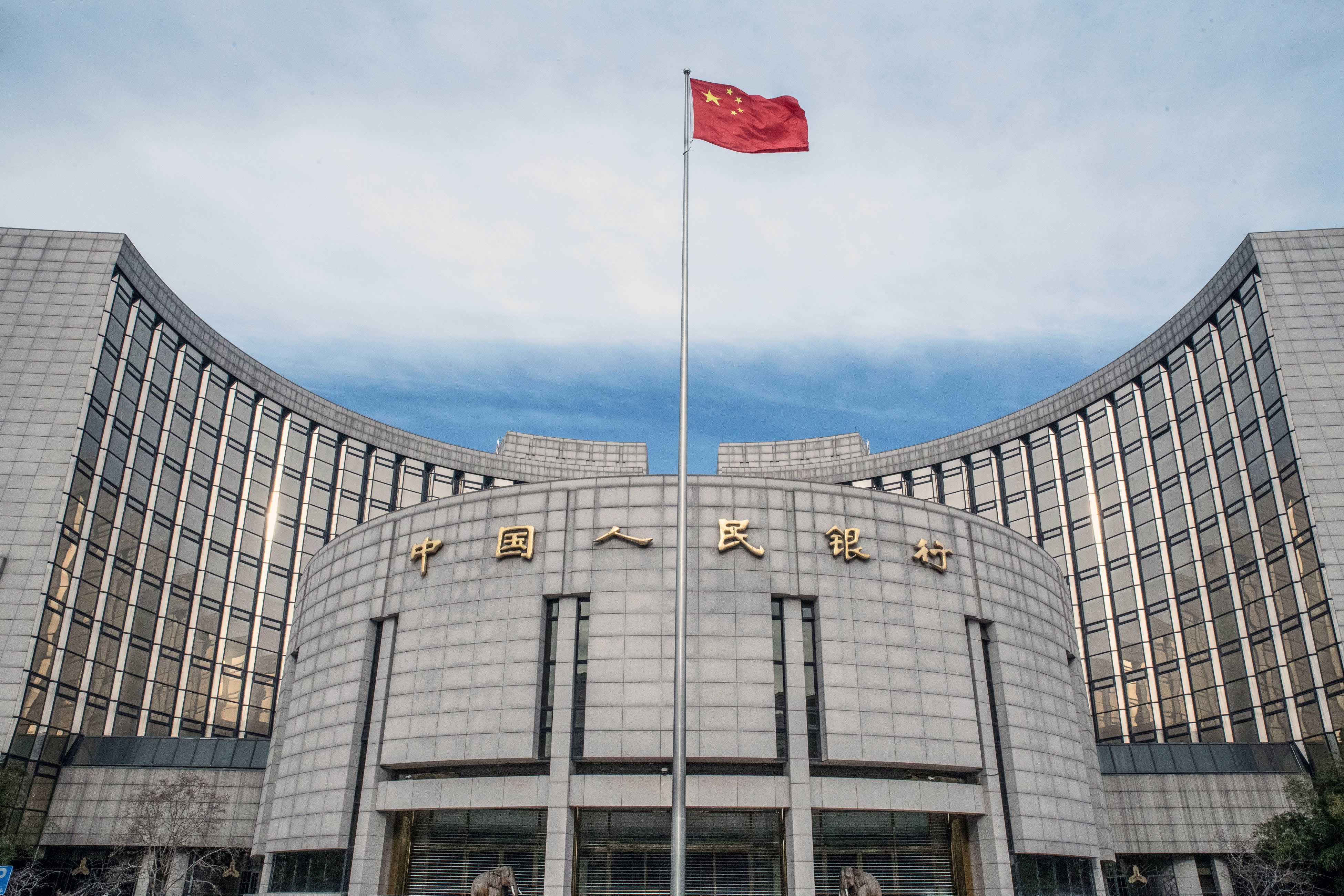
On Sunday afternoon US time, reports started coming in on WeChat groups that Chinese regulators had quietly instructed the country's major commercial banks to limit their purchases of U.S. Treasury securities, and that institutions with large existing positions had been told to begin unwinding them. The directive, communicated verbally over the past several weeks, was framed around concentration risk and market volatility. It does not apply to China's sovereign reserves.
The market reaction was swift but measured. The yield on the benchmark 10-year Treasury climbed to 4.25 percent. The 30-year pushed toward 4.88 percent. The dollar weakened. And then, as markets do, the news cycle began to move on.
It shouldn't.
What happened today is not a financial crisis. It is not a provocation. But it may be something more consequential than either — a signal that the architecture of global finance, built on the assumption that the world's largest economies would perpetually fund American borrowing at favorable rates, is undergoing a structural realignment that Washington has been slow to acknowledge and even slower to address.
The Long Unwinding
China's retreat from U.S. Treasuries did not begin today. It has been a slow, methodical repositioning that stretches back more than a decade. At its peak, China held approximately $1.3 trillion in U.S. government debt, making it the single largest foreign creditor to the United States. That figure has since fallen to roughly $682 billion, the lowest level since 2008. This reduction of nearly half, executed with the kind of patience that characterizes Beijing's approach to strategic economic decisions.
For years, this decline was easy to dismiss. The amounts were large in absolute terms but gradual in pace. Global demand for Treasuries remained robust. Other buyers — like Japan, the United Kingdom, Norway, Saudi Arabia — filled the gaps. The U.S. Treasury market, the deepest and most liquid in the world, seemed immune to the loss of any single participant.
But these reports change the calculus. This is no longer the passive byproduct of portfolio diversification. It is an active regulatory directive — a deliberate instruction from Beijing's financial authorities to its banking sector to reduce exposure to American sovereign debt. The distinction matters. Drift is one thing. Policy is another.
A Crowded Exit
Perhaps more importantly, China is not acting in isolation. In recent years, India has reduced its Treasury holdings. Brazil has pulled back. Saudi Arabia, once a reliable buyer of American debt as part of the long-standing petrodollar arrangement, has been diversifying into alternative assets and exploring non-dollar trade settlement mechanisms. Central banks worldwide have been accumulating gold at a pace not seen in decades.
The common thread is not hostility toward the United States. It is a rational reassessment of risk.
The fiscal trajectory of the U.S. government has become increasingly difficult to defend on its merits. Federal debt has surpassed $36 trillion. Annual deficits routinely exceed $1 trillion. Interest payments on the national debt are now among the largest line items in the federal budget — a self-reinforcing cycle in which borrowing to service past borrowing crowds out productive investment. Meanwhile, the political environment in Washington has introduced a new category of risk: policy unpredictability. Tariff escalations, threats to the independence of the Federal Reserve, erratic diplomatic postures — these are not theoretical concerns. They are active variables that foreign holders of U.S. debt must now price into their calculations.
When the country asking you to hold its debt is also the country threatening tariffs on your exports, the economic logic of the arrangement begins to fray.
The Arithmetic of Confidence
The U.S. Treasury market functions on confidence — the confidence that American debt is the safest, most liquid store of value on the planet. That confidence has been the cornerstone of American financial hegemony since the end of World War II. It is what allows the United States to borrow at rates that would be unavailable to any other nation carrying its level of debt. It is what makes the dollar the world's reserve currency.
But confidence is not a permanent condition. It is maintained through fiscal discipline, institutional credibility, and the perception of stability. All three are under strain.
When foreign holders of Treasuries begin to step back — not in panic, but in quiet, coordinated prudence — they are sending a message that the risk-reward calculus has shifted. They are not saying American debt is worthless. They are saying it is no longer the unquestioned default. And in a market built on trust, the distinction between "safe" and "safest" is the only distinction that matters.
What Comes Next
The immediate consequences are already visible. Rising yields mean higher borrowing costs across the economy: for mortgages, for auto loans, for corporate debt, for the federal government itself. A weaker dollar means higher import prices, adding inflationary pressure at a moment when the Federal Reserve is already navigating a narrow path. For American consumers, this translates to a higher cost of living that arrives not through any single policy decision but through the slow repricing of American creditworthiness in the eyes of the world.
The longer-term implications are more profound. If the current trajectory continues — if major foreign creditors continue to diversify away from Treasuries, if Washington continues to run structurally unsustainable deficits, if political dysfunction continues to erode institutional credibility — the United States will face a borrowing environment fundamentally different from the one it has enjoyed for the past several decades. Higher structural interest rates. A weaker dollar. Reduced fiscal flexibility precisely when fiscal flexibility is most needed.
None of this is inevitable. The United States retains enormous economic advantages: a dynamic private sector, deep capital markets, leading positions in technology and innovation. But advantages are not entitlements. They must be maintained through sound governance and fiscal responsibility — neither of which is currently in abundant supply.
The Real Risk
The greatest danger in today's news is not that China is selling Treasuries. It is that Washington will treat this as a minor story — a headline to be absorbed and forgotten by the next news cycle. Because the countries pulling back from American debt are not doing so impulsively. They are doing so deliberately, methodically, and with a long time horizon. They are making generational decisions about where to store their national wealth. And increasingly, the answer is: not here.
The United States has spent decades as the world's indispensable borrower. The world, it seems, is beginning to reconsider whether that arrangement still serves its interests. The question is whether American policymakers will recognize the shift before the market forces them to.
Because by the time a crisis of confidence becomes a crisis in the bond market, the time to act has already passed.