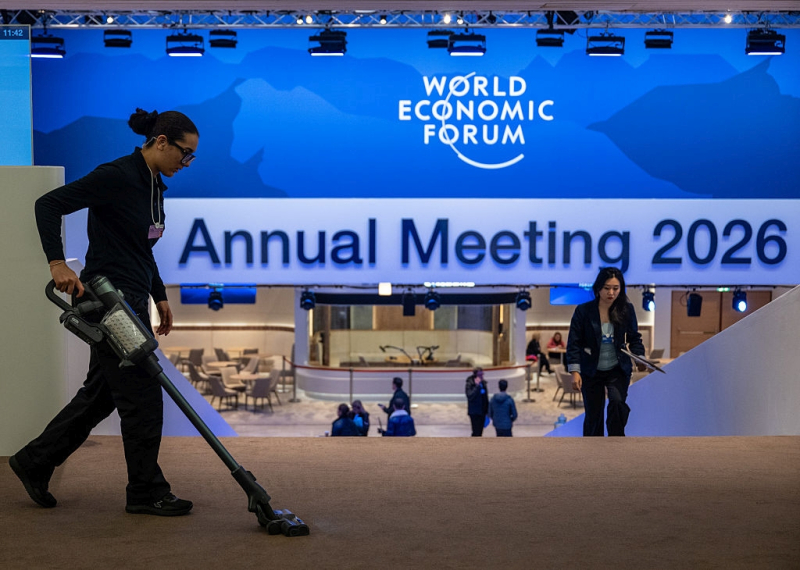
Each January, the small Swiss town of Davos becomes the temporary center of gravity for global politics, capital, and trade. Heads of state, central bankers, CEOs, investors, and policymakers descend on the Alps for the annual meeting of the World Economic Forum. Cameras focus on panels and speeches, while critics dismiss the event as elite theater.
Both views miss the point.
Davos is neither a world government nor an empty talk shop. It is something more subtle, and more relevant to global trade than most people realize.
A Brief History of Davos
The World Economic Forum was founded in 1971 by Klaus Schwab as a forum to bring European business leaders together to discuss management practices and long-term economic risks. Over time, the scope widened. Governments, multilateral institutions, and eventually global NGOs joined the conversation.
What began as a technocratic conference gradually evolved into an annual convergence point for the people who influence capital allocation, regulatory posture, and geopolitical alignment.
Crucially, Davos never acquired formal authority. It does not pass laws, negotiate treaties, or set tariffs. Its influence comes not from power, but from proximity.
Davos as a Coordination Mechanism
The most important thing to understand about Davos is this: it is not about decision-making, it is about expectation-setting.
Davos functions as a coordination space where influential actors test assumptions about the future:
- How aggressive will trade policy become?
- How fragmented will supply chains need to be?
- What level of geopolitical risk is now "normal"?
- Where will capital face regulatory headwinds or tailwinds?
In global trade, expectations matter almost as much as rules. Investment decisions, sourcing strategies, and pricing models are built on forecasts about policy direction and geopolitical stability. Davos is where many of those forecasts begin to converge.
Why Davos Matters for Global Trade
Trade policy rarely shifts overnight. It moves through phases:
- Narrative formation
- Political signaling
- Regulatory alignment
- Capital and supply-chain response
Davos operates primarily in the first two phases.
When political leaders speak in Davos, they are not announcing policy so much as signaling intent. When corporate leaders meet privately, they are comparing exposure, hedging strategies, and contingency plans. When investors listen, they are recalibrating risk assumptions.
Those conversations eventually translate into:
- Supply-chain diversification decisions
- Nearshoring or reshoring timelines
- Changes in sourcing geography
- Shifts in inventory and logistics strategy
- Capital reallocation across regions
By the time trade data reflects these changes, the groundwork was often laid months earlier — quietly — in places like Davos.
The Panel Illusion vs. the Reality
Public criticism of Davos often focuses on its visible shortcomings:
- Panels that produce vague language
- Lofty rhetoric disconnected from voters
- Optics that clash with discussions of inequality
Those critiques are not wrong, but they are incomplete.
The panels are largely performative. The substance happens off-camera: bilateral meetings, closed-door roundtables, and informal conversations that allow leaders to speak more candidly than they can at home.
This is why Davos can feel underwhelming to the public and indispensable to participants at the same time.
Davos, Disruption, and Trade Friction
Davos works best when the global system is relatively stable. It is a consensus-oriented environment designed to reduce uncertainty.
That is also why periods of trade disruption, tariff escalation, industrial policy, sanctions regimes create friction with the Davos worldview.
When leaders challenge globalization orthodoxy, Davos becomes less about alignment and more about stress-testing assumptions. That tension is especially visible during periods of U.S.–China trade friction, reshoring initiatives, and the politicization of supply chains.
From a trade perspective, these moments are often the most revealing. They expose which relationships are durable, which supply chains are resilient, and which assumptions were never as solid as they appeared.
What Davos Does Not Do
It is equally important to be clear about what Davos is not:
- It does not replace democratic institutions
- It does not impose trade rules
- It does not dictate national policy
Despite conspiracy theories to the contrary, Davos is not a secret world government, and it is certainly not run by lizard people.
Its influence is indirect, probabilistic, and lagged. Davos shapes the environment in which decisions are made; it does not make them itself.
Why Davos Still Matters
For companies engaged in global trade, manufacturers, developers, logistics firms, procurement specialists, Davos matters because it provides early insight into where the system is bending before it breaks.
Understanding Davos is less about agreeing with it and more about recognizing how narratives become reality in markets and policy.
Trade does not respond to ideology alone. It responds to risk perception, capital availability, and regulatory expectations. Davos remains one of the few places where those forces are openly, if imperfectly, discussed among the people who shape them.
The Bottom Line
Davos does not run the world. But it helps define what the people who do run the world believe is possible.
For global trade, that belief often becomes the difference between friction and flow, resilience and exposure, advantage and disruption.